Whittlesey Cambridgeshire Area Guide | Property, Villages & Living in Whittlesey
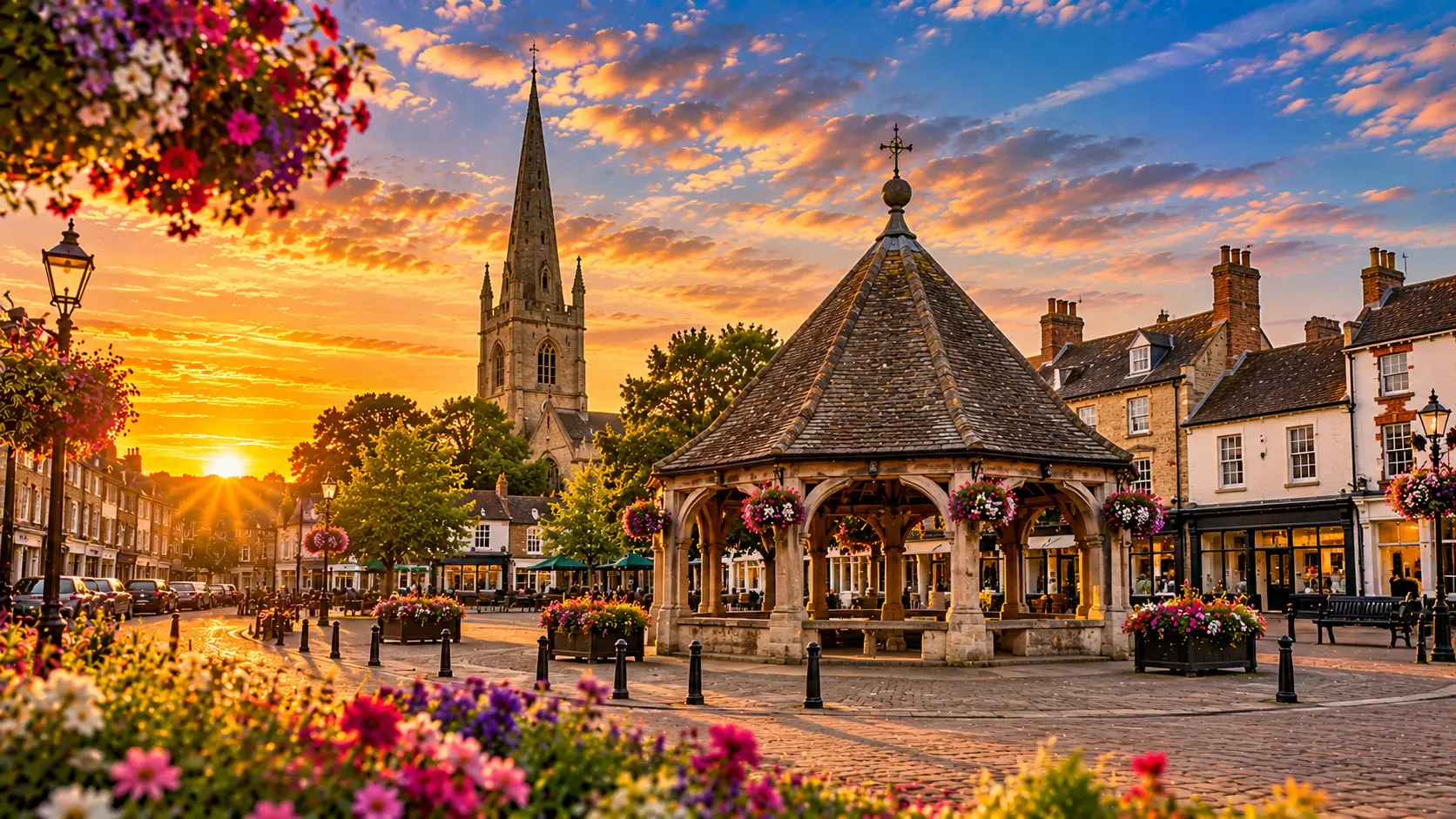
Whittlesey & Surrounding Villages Area Guide
Living in Whittlesey, Cambridgeshire
Historic, well connected and surrounded by the distinctive landscapes of the Cambridgeshire Fens, Whittlesey offers a compelling combination of market-town amenities, comparatively accessible property and excellent access to Peterborough.
Whittlesey is much more substantial than many first-time visitors expect.
The town has its own railway station, schools, shops, supermarkets, healthcare, leisure facilities, sports clubs, pubs, cafés, weekly market and a historic centre centred around the distinctive Buttercross.
Beyond Whittlesey itself, the neighbouring villages of Coates, Eastrea, Turves and Pondersbridge provide further choices for buyers wanting a quieter or more rural environment while remaining close to the town.
Property is equally varied.
Buyers searching for houses for sale in Whittlesey can find period cottages, Victorian and Edwardian homes, traditional terraces, bungalows, established family houses, modern developments and larger detached homes.
And unlike many smaller Cambridgeshire settlements, Whittlesey has its own railway station, giving residents direct regional rail connections while Peterborough station provides fast national services.
For families, professionals, Peterborough commuters, first-time buyers and anyone looking for more space for their budget than many locations closer to Cambridge, Whittlesey deserves serious consideration.
Where is Whittlesey?
Whittlesey lies on the western edge of the Cambridgeshire Fens, approximately seven miles east of Peterborough.
The town sits on the A605, which provides the principal road connection towards Peterborough to the west and March to the east. Whittlesey Town Council describes the surrounding landscape as predominantly agricultural, with crops including wheat, potatoes, broad beans and sweetcorn. Whittlesey Town Council
The surrounding villages include:
Coates
Eastrea
Turves
Pondersbridge
Together with Whittlesey, they form a varied area ranging from an established market town to small Fenland villages and more dispersed rural property.
A Brief History of Whittlesey
Whittlesey has an exceptionally long history.
The town appears in Anglo-Saxon records in 973, where it was written as Witlesig. The name has subsequently appeared as both Whittlesey and Whittlesea — a distinction that survives today because the railway station is still officially called Whittlesea. Whittlesey Town Council
Historically, Whittlesey occupied an island of higher ground surrounded by marshy fen.
Long before large-scale drainage transformed the landscape, this made the settlement strategically important.
Archaeological evidence in the wider area includes:
Bronze Age activity
Roman roads and artefacts
Medieval settlements
Fenland drainage history
Major archaeological discoveries at Must Farm
Agriculture later became fundamental to the local economy.
Another industry would also shape Whittlesey dramatically: brickmaking.
The local Oxford Clay proved particularly suitable for brick production, helping turn the area into one of Britain's important brick-producing landscapes. Whittlesey Town Council
Whittlesey Market Place and the Buttercross
At the heart of Whittlesey is its traditional Market Place.
Its defining landmark is the Buttercross, constructed in 1680.
The open market building provided shelter for traders, particularly sellers of dairy goods, and remains one of the town's most recognisable structures. Whittlesey Town Council
Around it are buildings from numerous periods, including timber-framed houses, brick Georgian properties and later commercial buildings.
The result is a town centre with considerably more historic character than a conventional modern shopping centre.
A weekly market continues the town's long trading tradition.
The Whittlesey Property Market
Whittlesey's property market is one of its major attractions.
Current Land Registry-backed Rightmove data records an overall average sold price of approximately £250,336 over the preceding year.
Detached homes averaged approximately £301,849, semi-detached properties approximately £227,825 and terraced houses around £176,015. Rightmove
Those figures make Whittlesey notably more accessible than many Cambridge-facing locations.
However, town-wide averages should always be treated carefully.
A smaller terrace near the centre occupies a completely different market from a substantial detached home on the edge of Whittlesey or a larger individual village property in Coates or Eastrea.
For sellers, accurate valuation requires consideration of:
Exact street
Property type
Plot
Condition
Parking
School proximity
Station access
Flood risk
Modernisation
Recent comparable sales
What Types of Property Can You Find in Whittlesey?
Historic Cottages and Period Property
The older parts of Whittlesey contain attractive cottages, traditional terraces and individual period homes.
Buyers may find:
Timber framing
Historic brickwork
Sash windows
Fireplaces
Traditional rooflines
Mature gardens
Some properties fall within conservation areas or may be listed.
Victorian and Edwardian Homes
Whittlesey expanded significantly during the 19th and early 20th centuries.
Traditional brick terraces and larger period houses provide an important part of the local market.
Established Family Housing
Three and four-bedroom family houses represent a substantial proportion of Whittlesey's housing stock.
These range from semi-detached homes to detached houses with garages and gardens.
Modern Developments
Continued expansion has introduced modern housing throughout the town.
These can particularly appeal to buyers wanting contemporary layouts, improved energy efficiency and off-road parking.
Bungalows
Whittlesey also has a notable supply of bungalows.
This can make the town particularly attractive to downsizers looking for single-storey accommodation without sacrificing access to shops, healthcare and transport.
Why Move to Whittlesey?
Whittlesey provides a practical balance that can be difficult to find elsewhere.
Residents benefit from:
Its own railway station
Strong Peterborough connections
Historic town centre
Weekly market
Supermarkets and shops
Primary schools
Secondary and sixth-form education
Leisure centre and swimming pool
Library
Museum
Sports clubs
Nature reserves
Nene Washes
Extensive Fenland countryside
A605 road connections
Distinctive annual community events
A broad and comparatively accessible housing market
It can therefore appeal to buyers who want more amenities than a village provides but don't necessarily want to live in a large city.
Shopping and Everyday Amenities
Whittlesey functions as the principal service centre for its surrounding villages.
The town provides a mixture of:
Supermarket shopping
Convenience stores
Independent retailers
Pharmacies
Hairdressers
Professional services
Cafés
Pubs
Takeaways
Library
Healthcare
Community facilities
Peterborough provides significantly larger retail centres only a relatively short journey away.
That makes Whittlesey particularly practical for residents of Coates, Eastrea, Turves and Pondersbridge as well as the town itself.
Eating and Drinking
Whittlesey has a varied selection of pubs, cafés, restaurants and takeaway food.
Its traditional centre allows residents to walk between several hospitality venues rather than needing to drive out of town.
Peterborough significantly expands the choice available, while the surrounding villages retain traditional pubs and community venues.
For property buyers moving from a larger town, having local nightlife and places to eat is an important distinction between Whittlesey and smaller Fenland villages.
The Straw Bear Festival
Few Cambridgeshire towns have a tradition as distinctive as Whittlesey's Straw Bear Festival.
Historically, a person dressed from head to foot in straw was paraded through the town around Plough Monday.
The custom had fallen into decline by the early 20th century but was revived in 1980.
It has since grown into a major folk festival incorporating music, dance, performance and the famous Straw Bear procession. Whittlesey Town Council
For Whittlesey, it provides something increasingly valuable from a place-marketing perspective:
a tradition genuinely associated with the town and nowhere else in quite the same way.
Must Farm – Britain's Pompeii
The wider Whittlesey area is also home to one of Britain's most important archaeological discoveries.
At Must Farm Quarry, archaeologists uncovered an extraordinarily preserved late Bronze Age settlement.
Timber homes had been constructed above a watercourse before being destroyed by fire and collapsing into the water.
The waterlogged conditions preserved an exceptional collection of domestic material.
The site has consequently been described as “Britain's Pompeii” and has transformed archaeologists' understanding of everyday Bronze Age life.
Whittlesey Town Council highlights Must Farm as one of the area's most important archaeological discoveries. Whittlesey Town Council
Whittlesey Museum
Whittlesey Museum provides another way to explore the area's history.
Its collection covers Whittlesey, Coates, Eastrea, Pondersbridge and Turves, spanning prehistoric archaeology through to the town's agricultural, industrial and social history. Whittlesey Museum
The museum is housed within the historic Town Hall and includes displays connected with traditional trades and agriculture.
For anyone moving into the area, it provides useful context for understanding how much the landscape and community have changed.
Coates
Living in Coates
East of Whittlesey lies Coates, one of the largest and best-known surrounding villages.
Coates offers a stronger village environment while remaining only a short distance from Whittlesey's shops, railway station and schools.
Its housing market includes:
Period cottages
Established terraces
Bungalows
Semi-detached family homes
Detached properties
Larger individual houses
The village is also particularly relevant for access to the Nene Washes and surrounding Fenland countryside.
For buyers wanting village life without moving far from Whittlesey, Coates is one of the most obvious alternatives.
Property in Coates
Coates can provide more of a traditional village setting than central Whittlesey.
Larger gardens and detached homes can be found in parts of the village, while older properties provide character.
Buyers often search Whittlesey and Coates simultaneously.
That means property values need to be assessed individually rather than assuming a fixed village premium or discount.
The strongest homes can appeal to buyers searching across the wider Peterborough and Fenland markets.
Nene Washes
Immediately north of Coates and Whittlesey lies the extraordinary landscape of the Nene Washes.
The RSPB describes the reserve as a huge washland for the River Nene.
The wider site extends to 1,522 hectares, with the RSPB managing approximately 800 hectares. RSPB
In summer it is dominated by grassland and wildflowers.
During winter large sections flood, transforming it into an important refuge for thousands of waterbirds.
Wildlife can include:
Black-tailed godwits
Snipe
Marsh harriers
Hen harriers
Peregrines
Short-eared owls
Cranes
The reserve is one of the strongest outdoor assets within the wider Whittlesey area.
Walking at the Nene Washes
The Nene Way long-distance footpath runs beside the reserve and provides elevated views across the washland. RSPB
The landscape is unlike a conventional country park.
There are vast horizons, flood meadows, waterways and huge skies rather than woodland trails and visitor-centre infrastructure.
The reserve is therefore particularly appealing to walkers, photographers and birdwatchers.
Conditions can change dramatically according to the season, particularly during winter flooding.
Eastrea
Living in Eastrea
Immediately east of Whittlesey, Eastrea provides another popular village option.
Its name reflects the area's historic island landscape, with the Old English ea associated with water or island environments.
Eastrea has a long history.
Records indicate that permission was granted for a chapel here in 1403, partly because poor weather and flooding could make journeys into Whittlesey difficult. Whittlesey Town Council
The village today consists of established residential areas and more modern family housing.
Its proximity to Whittlesey makes it attractive to buyers wanting a village address without sacrificing town amenities.
Property in Eastrea
Eastrea's property market includes:
Period homes
Semi-detached houses
Detached family property
Bungalows
Modern developments
Individual houses
The village can particularly appeal to families and buyers looking for additional space.
Because Eastrea sits immediately on the Whittlesey–March corridor, road access is also particularly straightforward.
Eastrea's Railway History
Eastrea once had its own railway station.
The station operated from 1845 until 1866, serving both passengers and agricultural traffic.
The railway line still passes close to the southern end of the village, but trains now use Whittlesea station instead. Whittlesey Town Council
For modern residents, Whittlesea remains the principal local rail connection.
Turves
Living in Turves
Turves offers a significantly more rural lifestyle.
The settlement sits on the quieter road between Whittlesey and March and is surrounded by open arable farmland.
Whittlesey Town Council describes it as a quiet residential area with homes concentrated principally around March Road and Burnt House Road. Whittlesey Town Council
It will appeal primarily to buyers who prioritise:
Countryside
Peace
Larger plots
Rural views
Individual homes
rather than immediate access to shops or extensive village amenities.
Property in Turves
Turves has a small and highly individual housing market.
Properties appear relatively infrequently and can range from traditional cottages to detached rural homes.
Transaction numbers are therefore too low for annual averages to be particularly meaningful.
When a good property becomes available, factors such as plot size, outbuildings, outlook and condition can be more important than village-wide price statistics.
Pondersbridge
Living in Pondersbridge
Approximately three miles south of Whittlesey lies Pondersbridge.
This is another small Fenland settlement, with housing concentrated principally around the B1040 and Oilmills Road.
The village developed around a crossing of an artificial drainage channel connected with the River Nene system. Whittlesey Town Council
Today it offers a distinctly rural lifestyle.
Properties tend to be more dispersed than within Whittlesey town and buyers should expect greater dependence on the car for everyday services.
St Thomas' Church, Pondersbridge
Pondersbridge has its own historic church.
St Thomas' Church was built in the 19th century and consecrated in 1871.
The village's former school has since become its village hall, which continues to host community activity. Whittlesey Town Council
These facilities help preserve Pondersbridge's identity despite its small size.
Walks Around Whittlesey
Whittlesey's walking environment is defined by the Fens.
Expect:
Wide horizons
Drainage waterways
Wildlife
Agricultural landscapes
Historic routes
Big skies
Seasonal flooding
Flat terrain
There are several particularly worthwhile options.
Whittlesey Town Trail
The town's heritage trail begins around the Market Place and Buttercross.
It highlights historic houses, churches and other features of Whittlesey's architectural development. Whittlesey Town Council
Nene Way
For a much longer landscape walk, sections of the Nene Way follow the washland north of the town.
Nene Washes
The wash bank provides outstanding wildlife views, particularly during seasonal bird migrations.
Village Routes
Footpaths and quieter roads connect Whittlesey with Coates, Eastrea and the surrounding agricultural landscape.
Cycling
The flat Fenland landscape makes Whittlesey particularly suitable for cycling.
Local routes allow riders to explore:
Coates
Eastrea
Turves
Pondersbridge
March
Peterborough
Nene Valley
Fenland countryside
The National Cycle Network passes within approximately a mile of the Nene Washes. RSPB
For serious recreational cyclists, the flat landscape makes longer-distance routes possible without the hills encountered elsewhere.
Care is required on rural roads, where traffic speeds can be high.
Sport and Leisure in Whittlesey
Whittlesey has an established sporting and leisure infrastructure.
The Manor Leisure Centre site currently provides facilities associated with swimming and indoor and outdoor sport.
Plans approved in 2026 involve substantial redevelopment, including a refurbished 25-metre swimming pool, learner pool, gym, fitness studios, sports hall, soft play, café and community space. Fenland District Council
The wider site also includes or has included:
Playing fields
Cricket
Tennis
Bowling
Multi-use games area
Skate park
Children's play
This represents a significant future investment in Whittlesey's leisure provision.
Schools in Whittlesey
Whittlesey provides education from nursery and primary age through to secondary and sixth form.
Primary-age provision includes schools such as:
Alderman Jacobs School
New Road Primary & Nursery School
Park Lane Primary & Nursery School
Alderman Jacobs currently educates pupils aged 3–11 and was graded Good at its latest published inspection. Ofsted Reports
Park Lane Primary & Nursery School educates ages 3–11 and was also graded Good at its 2024 inspection. Ofsted Reports
New Road Primary & Nursery School provides education from age 2 to 11 and was inspected most recently in April 2026. Ofsted Reports
Families should always check current catchment and admission arrangements for the exact address they are considering.
Sir Harry Smith Community College
Secondary education is provided locally by Sir Harry Smith Community College on Eastrea Road.
The academy educates pupils aged 11–18 and has sixth-form provision. Ofsted Reports
Its September 2025 Ofsted inspection judged quality of education, behaviour and attitudes, personal development, leadership and management and sixth-form provision as Requires Improvement. Ofsted Reports
This is worth stating accurately rather than relying on older references to the school's previous Good judgement.
Parents should review the full current report and consider the school's ongoing development alongside other available options.
Whittlesea Railway Station
One of Whittlesey's most important advantages is that it has its own railway station.
Officially named Whittlesea, the station sits south-east of the town centre. National Rail
Services connect the town with destinations including Peterborough and Ely, with onward connections from those stations to a much wider national rail network.
The station has:
Ticket machine
Sheltered waiting area
Seating
Bicycle storage
Small car park
Step-free access to parts/all platforms under category B2 arrangements
It is an unstaffed station. National Rail
For buyers comparing Whittlesey with Ramsey, this rail connection is a significant advantage.
Whittlesey to Peterborough by Train
Peterborough is the most important rail destination for many Whittlesey residents.
From Peterborough, passengers can connect with fast services towards:
London
York
Leeds
Newcastle
Edinburgh
Birmingham
other destinations
This makes Whittlesey particularly interesting for hybrid workers.
Rather than relying solely on driving, residents can use the local train to reach Peterborough and connect onward.
Service frequency from Whittlesea is more limited than at major stations, so commuters should check the timetable carefully before making purchasing decisions.
Whittlesey to Ely and Cambridge
Eastbound rail services connect Whittlesey towards Ely.
Ely is a major regional interchange with services towards Cambridge, Norwich and London. National Rail
This provides another option for residents travelling south or east.
However, buyers planning a daily Cambridge commute should examine the actual rail connections carefully because journey convenience will depend on timetable and interchange patterns.
Bus Services
Whittlesey is served by buses connecting the town with Peterborough and surrounding settlements.
The villages along the A605, including Coates and Eastrea, also benefit from corridor services.
Bus timetables can change and rural frequencies vary, so anyone planning to depend on a specific service for employment or education should check current operator information before moving.
For many households, the combination of car, bus and railway gives Whittlesey more transport flexibility than smaller surrounding villages.
Travelling by Car
Whittlesey is particularly well positioned for Peterborough.
The A605 provides the principal east-west connection through the area.
Indicatively:
Peterborough – approximately 7 miles
March – approximately 10 miles
Ramsey – approximately 10–12 miles
Huntingdon – approximately 20 miles
Cambridge – approximately 35–40 miles
Actual journey times depend on traffic and the specific starting point.
For Peterborough commuters, Whittlesey's position is particularly strong.
For Cambridge commuters, the journey is considerably longer and more car-dependent than from locations such as St Ives or Fen Drayton.
Whittlesey and Peterborough
Whittlesey's relationship with Peterborough is fundamental to the local property market.
Peterborough provides:
Major employment
Extensive shopping
Peterborough City Hospital
Mainline railway
Restaurants
Entertainment
Further education
Professional services
Leisure facilities
Yet Whittlesey offers a much smaller environment.
For buyers working in Peterborough who would prefer a traditional market town or village rather than city living, that relationship is central to Whittlesey's appeal.
Healthcare
Whittlesey provides local primary healthcare, pharmacies, dentists and other everyday services.
For hospital treatment, Peterborough City Hospital is one of the principal major hospitals for the area.
Additional specialist healthcare is available throughout Peterborough and Cambridge.
The presence of local health facilities is particularly important for downsizers and families considering the town.
Fenland Flood Risk
Like Ramsey and many other settlements within the Fens, Whittlesey exists within a landscape shaped by centuries of water management.
The nearby Nene Washes are deliberately designed to act as washland for flood water. RSPB
That does not mean every Whittlesey property is at high flood risk.
Risk varies considerably according to:
Street
Ground level
Watercourse proximity
Drainage
Surface water
flood-defence infrastructure
Anyone buying should check the property-specific Environment Agency information and conveyancing searches rather than making assumptions based solely on the wider Fenland landscape.
Is Whittlesey a Good Place to Live?
For many buyers, Whittlesey offers an appealing balance of affordability, amenities and connectivity.
It has enough infrastructure to support day-to-day life without requiring constant travel into Peterborough.
Families have local schools and recreational facilities.
Commuters have their own railway station.
First-time buyers can access terraces and smaller homes at prices considerably below many locations closer to Cambridge.
Families can move into detached housing without necessarily facing Cambridge-area prices.
Downsizers have bungalows, shops and healthcare.
And walkers and nature lovers have access to one of Britain's most unusual landscapes at the Nene Washes.
Whittlesey won't suit everybody.
Cambridge is considerably further away, some surrounding villages are car-dependent and Fenland flood considerations require sensible investigation.
But for buyers focused on Peterborough, space and value, it has a great deal to offer.
Whittlesey or Peterborough?
Buyers often compare the two.
Choose Peterborough if your priorities include:
Much larger shopping
Major hospital
More employment
Faster national rail services
Extensive restaurants and leisure
City amenities
Choose Whittlesey if you prioritise:
Smaller-town atmosphere
Traditional market centre
More village-style community
Fenland countryside
Potentially better value
Your own local railway station without living in the city
For many households, Whittlesey provides the ability to use Peterborough's infrastructure without living directly within Peterborough.
Whittlesey or Ramsey?
This is another natural comparison.
Whittlesey has the major advantage of its own railway station and much closer access to Peterborough.
Ramsey offers the Great Fen, a different historic identity and a more Huntingdon-focused geography.
Both can offer strong value compared with Cambridge-facing markets.
For buyers needing regular rail access, Whittlesey generally has the stronger proposition.
For buyers prioritising rural space and the Great Fen, Ramsey may appeal more strongly.
Whittlesey or Coates?
Whittlesey provides more shops, schools, healthcare and transport.
Coates provides more of a traditional village environment while remaining extremely close to the town.
Families and buyers looking for larger detached homes may sensibly consider both.
The individual property will often matter more than the boundary between them.
Things to Do in Whittlesey
Explore the Market Place and Buttercross
Discover the town's historic commercial centre and its 17th-century Buttercross.
Experience the Straw Bear Festival
See one of Cambridgeshire's most distinctive folk traditions.
Walk the Whittlesey Town Trail
Explore some of the town's most interesting historic buildings.
Visit Whittlesey Museum
Discover the history of Whittlesey and its surrounding villages.
Explore Nene Washes
Walk the wash bank and experience one of Britain's most important wetland landscapes.
Discover Must Farm
Learn about one of Britain's most remarkable Bronze Age archaeological discoveries.
Cycle the Fens
Explore Coates, Eastrea and the surrounding countryside.
Visit Peterborough
Shopping, restaurants, cathedral, rail connections and entertainment are only a short journey away.
Buying Property in Whittlesey
If you're considering buying a house in Whittlesey or its surrounding villages, think beyond simply comparing asking prices.
Important factors include:
Distance from Whittlesea station
School catchment
Access to the A605
Flood risk
Surface-water risk
Property construction
Listed or conservation status
Garden size
Parking
Traffic
Rail noise for relevant properties
Broadband
Drainage
Future development
Distance from shops and healthcare
For more rural homes, buyers should also investigate private drainage, heating systems and access arrangements where relevant.
Selling Property in Whittlesey
The Whittlesey area contains several very different buyer markets.
A two-bedroom town-centre terrace may primarily appeal to first-time buyers or investors.
A bungalow may be aimed at downsizers.
A four-bedroom home in Eastrea may appeal to a family commuting into Peterborough.
A character home in Coates may attract a buyer searching across a much wider radius.
And a rural house near Turves or Pondersbridge may be all about space, views and lifestyle.
Those properties shouldn't receive identical marketing.
At Lennon James Property, we believe the marketing should explain both what the home offers and why someone should want to live there.
That means combining professional photography, cinematic video, considered presentation, detailed descriptions, social-media marketing and intelligent digital distribution to make each property stand out.
Estate Agents in Whittlesey, Cambridgeshire
Whether you're considering selling a house in Whittlesey, Coates, Eastrea, Turves or Pondersbridge, understanding the differences between these local markets matters.
Whittlesey isn't one generic property market.
It ranges from first-time-buyer terraces and established family estates to village cottages, bungalows and individual rural homes.
At Lennon James Property, our approach is built around the individual property.
We combine local market knowledge, exceptional presentation and proactive marketing to ensure the home reaches the buyers most likely to appreciate it.
Explore properties for sale in Whittlesey and the surrounding villages or arrange a property valuation with Lennon James Property.
Frequently Asked Questions About Whittlesey
Is Whittlesey a good place to live?
Whittlesey can be particularly attractive to buyers wanting a smaller market town, their own railway station, strong Peterborough access and comparatively affordable property.
Where is Whittlesey?
Whittlesey is approximately seven miles east of Peterborough on the western edge of the Cambridgeshire Fens. Whittlesey Town Council
Does Whittlesey have a train station?
Yes. The station is officially named Whittlesea and provides regional rail connections towards Peterborough and Ely. National Rail
Why is the station called Whittlesea?
The town has historically used both Whittlesey and Whittlesea. The town is now Whittlesey, but the railway station retains the older Whittlesea spelling. Whittlesey Town Council
What is the average house price in Whittlesey?
Current sold-price data records an overall average of approximately £250,000, although prices vary substantially according to property type and location. Rightmove
What types of houses are available?
Buyers can find period cottages, terraces, semi-detached family houses, detached properties, modern homes and bungalows.
Is Whittlesey cheaper than Cambridge?
Broadly, Whittlesey's property market is substantially less expensive than Cambridge, although individual homes naturally vary.
Is Whittlesey good for Peterborough commuters?
Yes. Peterborough is approximately seven miles away and can be reached by both road and rail.
Can you commute from Whittlesey to London?
Yes, typically by travelling to Peterborough and connecting with fast London services. Buyers should check actual connection times for their intended commute.
Is Whittlesey suitable for families?
The town has several primary schools, secondary and sixth-form provision, leisure facilities, play areas and a broad family-housing market.
What schools are in Whittlesey?
Primary options include Alderman Jacobs, Park Lane Primary & Nursery and New Road Primary & Nursery. Sir Harry Smith Community College provides secondary and sixth-form education. Ofsted Reports
Does Whittlesey have a swimming pool?
Yes. The Manor Leisure Centre site includes swimming provision, and a major redevelopment approved in 2026 includes refurbishment of the 25m pool and substantial new leisure facilities. Fenland District Council
What is Whittlesey famous for?
Whittlesey is particularly known for its Straw Bear Festival, historic Buttercross, Fenland setting, brickmaking history and the nearby Must Farm archaeological site. Whittlesey Town Council
What is the Straw Bear Festival?
It is a revived traditional festival involving a person dressed in straw processing through Whittlesey with music and folk dancing. The modern revival began in 1980. Whittlesey Town Council
What are the Nene Washes?
The Nene Washes are extensive flood meadows north of Whittlesey and Coates that provide internationally important wetland habitat. RSPB
Are there good walks around Whittlesey?
Yes. Options include the town heritage trail, the Nene Way, Nene Washes and rural routes through the surrounding Fenland countryside.
What are the main villages around Whittlesey?
The principal parish villages are Coates, Eastrea, Turves and Pondersbridge. Whittlesey Town Council
What is Coates like?
Coates offers more of a traditional village environment while remaining close to Whittlesey and providing excellent access to the Nene Washes.
What is Eastrea like?
Eastrea is an established village immediately east of Whittlesey with a mixture of older and modern family property.
What is Turves like?
Turves is much more rural and consists of a smaller number of homes surrounded by agricultural countryside. Whittlesey Town Council
What is Pondersbridge like?
Pondersbridge is a small rural settlement south of Whittlesey with dispersed housing and its own village hall and church. Whittlesey Town Council
Should I check flood risk when buying in Whittlesey?
Yes. Flood and surface-water risk should always be checked for the individual property, particularly in Fenland areas, rather than inferred from the town as a whole.