Ramsey Cambridgeshire Area Guide | Property, Villages & Living in Ramsey
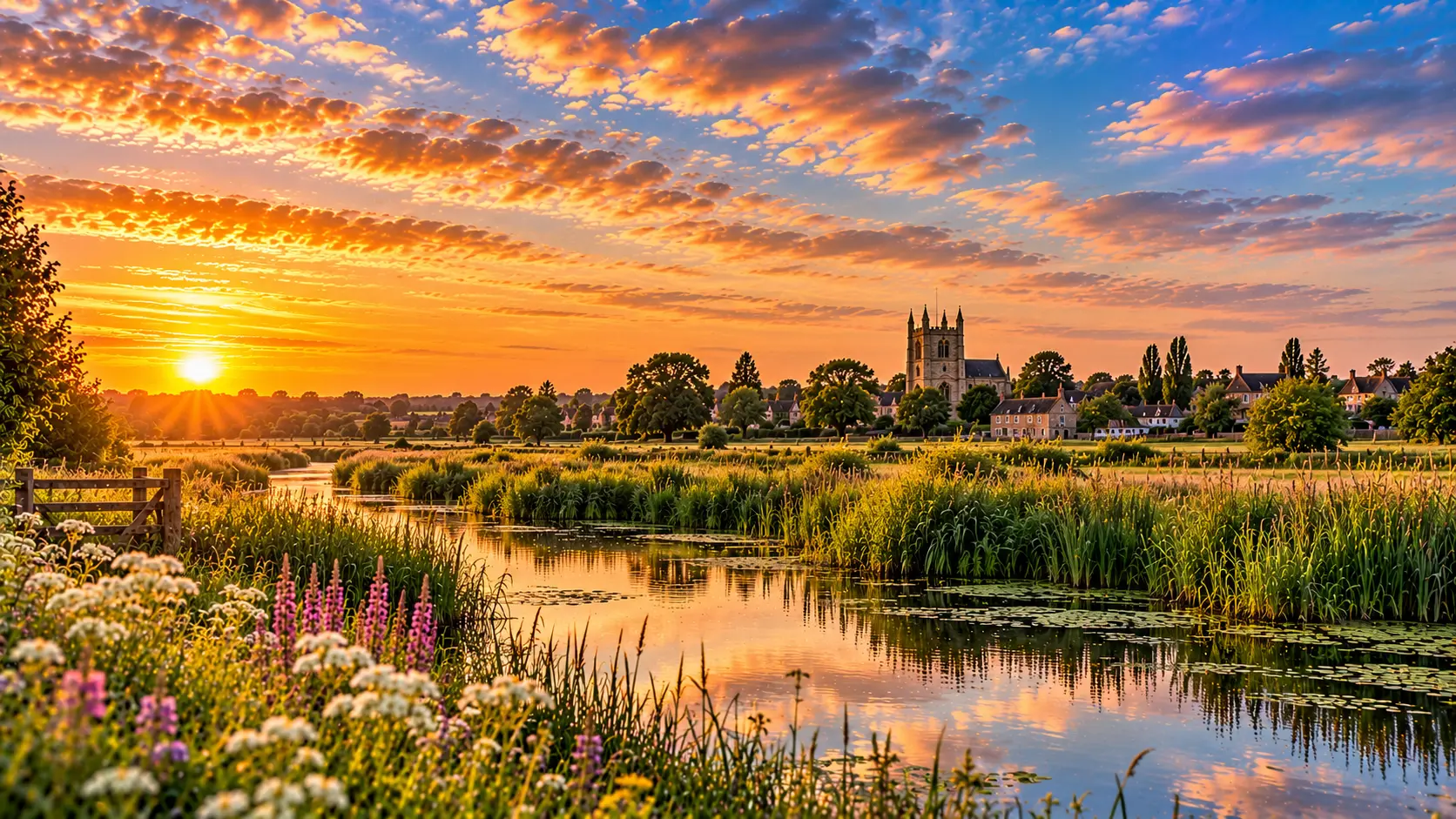
Ramsey & Surrounding Villages Area Guide
Living in Ramsey, Cambridgeshire
Historic, distinctive and surrounded by the extraordinary landscape of the Cambridgeshire Fens, Ramsey offers a very different proposition from many of the towns and villages around Huntingdon. At its centre is a traditional market town with independent shops, schools, healthcare, sports facilities, pubs, community amenities and a history stretching back more than a thousand years to the foundation of Ramsey Abbey.
Beyond the town, a collection of smaller communities including Bury, Ramsey St Mary’s, Ramsey Forty Foot, Ramsey Heights and Upwood creates a surprisingly varied local property market.
Buyers can choose between town-centre period houses, established family estates, bungalows, modern developments, village cottages, detached homes with substantial plots and genuinely rural properties surrounded by open Fenland.
Ramsey's location also puts residents close to one of the most ambitious landscape-restoration projects in Europe: The Great Fen.
For buyers wanting more space, a strong sense of community and access to countryside while remaining within reach of Huntingdon, Peterborough and Cambridge, Ramsey and its surrounding villages deserve serious consideration.
Where is Ramsey?
Ramsey lies in Huntingdonshire, Cambridgeshire, north-east of Huntingdon and south of Peterborough.
The town occupies the western edge of the Cambridgeshire Fens.
Historically, this landscape was dominated by wetlands, meres and islands of slightly higher ground.
Centuries of drainage transformed much of it into the extraordinarily flat and fertile agricultural landscape seen today.
The surrounding settlements include:
Bury
Upwood
Ramsey St Mary’s
Ramsey Forty Foot
Ramsey Heights
Pondersbridge
Ramsey Mereside
Wistow
Warboys
Together, these communities give the wider Ramsey area a much larger geographical identity than the town alone.
A Brief History of Ramsey
Ramsey has one of the most fascinating histories of any settlement in Huntingdonshire.
Its development is inseparable from Ramsey Abbey.
The abbey began with a hermitage associated with Aylwin, Duke of East Anglia, before an abbey church was constructed in AD 969.
The monastery became one of medieval England's important Benedictine houses.
Its wealth and influence helped shape the settlement that developed around it.
Ramsey's relative isolation within the surrounding fen landscape also played an important role in its development.
Before widespread drainage, water was not simply an obstacle — it was an important means of transport.
The surrounding waterways connected Ramsey with other settlements and allowed agricultural produce and goods to be transported through the Fens.
Ramsey Abbey
For centuries, Ramsey Abbey dominated life in the area.
The abbey was rebuilt on a grand scale during the medieval period, with Barnack stone used extensively in its church and monastic buildings.
Like the other great monasteries, its fortunes changed dramatically during the Dissolution of the Monasteries.
The abbey was dissolved in 1539 and its estate granted to Sir Richard Cromwell.
Much of the complex was subsequently demolished and its stone reused elsewhere.
Despite this, Ramsey's abbey heritage remains visible throughout the town.
The surviving buildings, Abbey Green and street pattern provide important clues to the scale and influence of the medieval monastery.
St Thomas à Becket Church
One of Ramsey's most important surviving historic buildings is St Thomas à Becket Church.
Ramsey did not originally need a separate parish church because residents worshipped within the abbey.
A parish church was eventually established during the medieval period as the town expanded.
The surviving church has strong architectural connections with Ramsey Abbey and forms an important part of the historic area around Abbey Green.
Together with the surviving abbey buildings and grounds, it creates one of Ramsey's most attractive historic settings.
Great Whyte
One of Ramsey's most distinctive features is Great Whyte.
Unlike a conventional High Street, its unusually broad layout reflects the town's relationship with water and drainage.
The historic watercourse through the centre was eventually covered, helping create the wide street seen today.
Great Whyte now forms one of Ramsey's principal commercial streets.
Its unusual proportions give the centre a character that is very different from surrounding Huntingdonshire towns.
The Ramsey Property Market
Ramsey has one of the broadest selections of relatively accessible property in this part of Cambridgeshire.
Across the wider PE26 postcode, recent Land Registry-backed sold-price data gives an overall average of approximately £293,000.
Detached homes have averaged approximately £360,000, semi-detached properties around £250,500 and terraced houses approximately £199,800.
Those figures should be treated only as broad context.
PE26 covers Ramsey and several surrounding communities, and the difference between a town-centre terrace, village bungalow and substantial rural detached house can be considerable.
For buyers, however, Ramsey can often provide more house and more land for the money than locations closer to Cambridge.
Property in Ramsey Town
Ramsey itself contains a broad range of housing.
Period Property
The historic centre contains older cottages, terraces and individual period houses.
Locations around the older streets can provide character features, established plots and easy access to town-centre amenities.
Victorian and Edwardian Homes
Traditional brick-built properties from the 19th and early 20th centuries can be found throughout the established parts of Ramsey.
These can particularly appeal to buyers looking for character without necessarily wanting the complexity of a much older listed property.
Established Family Homes
A significant part of Ramsey's housing stock consists of established two, three and four-bedroom houses.
These range from terraces and semi-detached homes to larger detached properties.
Bungalows
Ramsey and its surrounding villages have a particularly useful bungalow market.
For downsizers wanting single-storey accommodation while remaining close to shops and healthcare, this can be a major attraction.
Modern Homes
More recent developments have added modern family houses with contemporary layouts, parking and improved energy efficiency.
Rural and Individual Property
On the edges of Ramsey and throughout the surrounding villages, buyers can also find individual homes with larger plots, workshops, outbuildings and countryside outlooks.
Bury, Cambridgeshire
Living in Bury
Immediately south of Ramsey is Bury.
The two settlements are closely connected and can feel almost continuous in places, but Bury retains its own village identity.
For buyers, Bury provides a useful middle ground.
It offers village living while keeping Ramsey's schools, shops, healthcare and leisure facilities exceptionally close.
Housing includes:
Period cottages
Established semi-detached houses
Detached family homes
Bungalows
Modern housing
Larger individual properties
Bury is particularly attractive to families who want to remain close to Ramsey while preferring a smaller residential setting.
Property in Bury
Bury's housing market varies significantly according to the individual property.
Homes around the established village can range from smaller cottages and family houses to substantial detached properties.
Because Bury is physically so close to Ramsey, buyers will often search both locations simultaneously.
That means sellers in Bury aren't competing solely with other village properties — they may also be competing with larger homes in Ramsey itself.
The precise position, plot, condition and outlook therefore matter considerably.
Bury CofE Primary School
Bury has its own Church of England primary school on Owls End.
Having primary education within the village is an important attraction for families.
Ramsey's secondary provision is also nearby, allowing families to remain within the same wider community as children progress through school.
Parents should always verify current admissions and catchment arrangements for the individual address they are considering.
Upwood
Living in Upwood
South-west of Ramsey and Bury lies Upwood.
Upwood has a distinctly more traditional village atmosphere, with an attractive historic core, church, community facilities and countryside surrounding the settlement.
The village appeals particularly to buyers wanting a quieter environment while remaining within easy reach of Ramsey and Huntingdon.
Its housing market includes:
Period cottages
Character homes
Terraced houses
Semi-detached homes
Bungalows
Detached family houses
Larger individual properties
Recent Land Registry-backed data places the average sold price in Upwood at approximately £325,400, with detached homes averaging around £420,000.
Because transaction numbers are relatively modest, those figures should be treated as broad indicators rather than valuations for an individual home.
Ramsey St Mary’s
Living in Ramsey St Mary’s
To the north-east of Ramsey lies Ramsey St Mary’s.
This is a very different environment from Ramsey town.
The settlement stretches through a characteristically open Fenland landscape, with housing distributed along roads including Herne Road and surrounding lanes.
Ramsey St Mary’s has its own:
Primary school
Pre-school
Church
Local store/Post Office
Children's play facilities
The surrounding countryside creates a strong sense of openness.
For buyers who enjoy expansive skies and rural views, Ramsey St Mary’s provides a particularly distinctive setting.
Property in Ramsey St Mary’s
Ramsey St Mary’s has a surprisingly varied housing market.
Recent Land Registry-backed data places the overall average sold price at approximately £270,000.
Semi-detached properties have recently averaged around £254,000, while detached homes have averaged approximately £408,000.
Individual sales range much more widely.
Larger detached homes with substantial plots, outbuildings or more rural positions can command significantly higher prices.
This is another market where the individual property matters far more than the headline village average.
The Ashbeach Primary School
Ramsey St Mary’s has its own primary school, The Ashbeach Primary School.
Its most recent published Ofsted inspection rated the school Good.
For families considering Ramsey St Mary’s specifically, having primary education within the community is a significant practical advantage.
Current admissions arrangements should always be checked directly before making a property decision.
Ramsey Forty Foot
Living in Ramsey Forty Foot
Ramsey Forty Foot provides a much more rural Fenland environment.
The settlement is characterised by linear development, drainage channels, agricultural land and expansive views.
Housing is considerably more dispersed than in Ramsey itself.
Properties can include:
Traditional cottages
Bungalows
Detached houses
Former agricultural homes
Properties with substantial plots
Homes with workshops or outbuildings
For buyers wanting space and a genuinely rural setting while remaining within reach of Ramsey, Ramsey Forty Foot can offer opportunities that are difficult to replicate in more densely developed villages.
The trade-off is greater dependence on the car for everyday amenities.
Ramsey Heights
Living in Ramsey Heights
Ramsey Heights is particularly associated with The Great Fen and Ramsey Heights Nature Reserve.
The settlement is rural and dispersed, with homes surrounded by an unusually rich Fenland environment.
For nature lovers, walkers and buyers wanting peace and open countryside, this is one of the most distinctive locations within the wider Ramsey area.
Property becomes available relatively infrequently, meaning individual homes can be difficult to compare directly.
Ramsey Heights Nature Reserve
The nature reserve is one of the wider area's real assets.
Located on Chapel Road, Ramsey Heights Nature Reserve contains ponds, reedbeds, meadows and woodland-like habitat developed around former clay pits.
The Wildlife Trust's Countryside Centre occupies a converted Victorian brickworks.
Families can explore:
Pond-dipping areas
Wildlife habitats
Bird hide
Minibeast areas
Outdoor classroom
Den-building areas
Nature trails
The reserve is free to visit and open throughout the year.
For families living around Ramsey, it provides an excellent local introduction to the wildlife of the Fens.
The Great Fen
One of the strongest reasons to consider the Ramsey area is The Great Fen.
This ambitious landscape-restoration project is reconnecting and restoring the Fenland environment between Holme Fen and Woodwalton Fen.
The long-term project aims to create approximately 3,700 hectares — around 9,000 acres — of connected habitat.
For residents, it creates opportunities for:
Walking
Wildlife watching
Birdwatching
Photography
Family activities
Nature education
Dark-sky experiences
Exploring Fenland history
As the project continues, the importance of the Great Fen as both an environmental and recreational destination is likely to grow.
Walking Around Ramsey
Ramsey's walking landscape is completely different from the rolling countryside found elsewhere in England.
The defining features are:
Huge skies
Drainage channels
Reedbeds
Wetlands
Agricultural fields
Nature reserves
Long-distance views
This creates some memorable walking opportunities.
Great Fen Walking Trails
The Great Fen provides a network of waymarked walks.
Options include short family-friendly trails and substantially longer routes.
Examples include:
Burning Bricks and the Hidden Harbour – approximately 800 metres
Dragonfly Trail – approximately 3km
Northern Loop Trail – approximately 3.5km
Last of the Meres Trail – approximately 10.5km
There are also trails at Woodwalton Fen and Holme Fen.
Access and diversions can change while habitat-restoration works are undertaken, so walkers should check the current Great Fen information before travelling.
Holme Fen
Nearby Holme Fen is another remarkable landscape.
It forms part of the Great Fen project and contains woodland, wetlands and important natural habitats.
The famous Holme Posts demonstrate the dramatic lowering of the surrounding peat landscape following drainage.
The area includes some of the lowest land in Britain.
For walkers and anyone interested in the history of Fenland drainage, it provides a fascinating destination.
Woodwalton Fen
Woodwalton Fen National Nature Reserve provides another major area for wildlife and walking.
Its wetlands support an exceptional variety of plants, birds and other wildlife.
Together with Holme Fen, it forms the ecological foundation of the wider Great Fen project.
The reserve offers several marked walking routes.
Dark Skies
One of the less obvious attractions of the Great Fen is its night sky.
Low levels of artificial light mean parts of the Great Fen have designated Dark Sky status.
For residents used to the light pollution of Cambridge, Peterborough or London, the difference can be remarkable.
Stargazing, night walks and wildlife events add another dimension to living close to the reserve.
Cycling Around Ramsey
The flat Fenland landscape makes the Ramsey area naturally suited to cycling.
Routes connect Ramsey with surrounding communities including:
Bury
Upwood
Ramsey St Mary’s
Warboys
Wistow
Holme
Yaxley
Huntingdonshire villages
For recreational cyclists, the lack of major gradients can make relatively long routes accessible.
Riders should nevertheless take care on rural Fen roads, which can be narrow and fast-moving.
Ramsey Rural Museum
Ramsey's history can also be explored at Ramsey Rural Museum.
The museum preserves the agricultural, domestic and social history of Ramsey and the surrounding Fenland communities.
For newcomers to the area, it provides valuable context for understanding how dramatically the landscape and way of life have changed.
The museum is particularly relevant because agriculture and drainage are fundamental to Ramsey's identity.
Ramsey 1940s Camp
Another unusual local attraction is Ramsey 1940s Camp.
The site preserves elements of the area's wartime history and provides exhibitions and events connected with the 1940s.
Together with the Rural Museum, Ramsey Abbey heritage and Great Fen, it gives the area a surprisingly broad range of local historical attractions.
Shops and Amenities in Ramsey
Ramsey functions as the principal service centre for its surrounding villages.
Facilities include:
Supermarket
Convenience stores
Independent retailers
Post Office
Library
GP surgery
Health centre
Dentist
Petrol stations
Vehicle servicing
Pubs
Cafés and takeaway food
Community centre
Schools and nurseries
Sports clubs
Play areas
Recreation fields
Leisure centre
This is particularly important for buyers considering one of the smaller Ramsey villages.
Living rurally does not necessarily mean travelling all the way to Huntingdon or Peterborough for everyday needs.
Eating and Drinking
Ramsey and the surrounding villages provide a mixture of pubs, cafés, takeaway food and informal dining.
The area's hospitality offer is naturally smaller than Huntingdon, St Ives or Peterborough.
However, residents have local choices for everyday eating and drinking, with a wider selection available by travelling to Huntingdon or Peterborough.
Traditional village pubs throughout the wider Huntingdonshire countryside add further options.
Sport and Leisure
Ramsey has a surprisingly broad sporting community.
Activities and facilities in the wider area include:
Football
Cricket
Golf
Archery
Martial arts
Walking
Running
Cycling
Fitness
Children's sports
Wildlife activities
The area includes Ramsey Golf Club and The Old Nene Golf & Country Club, while Ramsey Town Football Club and other community clubs provide organised sport.
For children, the town council lists groups including Ramsey Colts, Scouts, Guides, Air Cadets and other youth activities.
Schools in Ramsey
Education is one of Ramsey's practical strengths.
The town provides education from infant age through to sixth form.
Ramsey Spinning Infant School
Ramsey Spinning Infant School provides early primary education within the town.
Ramsey Junior School
Ramsey Junior School provides the next stage of primary education.
Both schools form part of the established educational infrastructure serving Ramsey families.
Parents should review the latest Ofsted reports and admissions information when considering an individual property.
Abbey College, Ramsey
Abbey College provides secondary and sixth-form education for Ramsey and the wider area.
The school educates pupils aged 11–18.
Its October 2023 Ofsted inspection judged the school Good overall.
Personal development and sixth-form provision were both judged Outstanding.
Having secondary and sixth-form education within Ramsey itself is a significant practical advantage compared with smaller villages where pupils may need to travel considerably further.
Primary Schools in the Surrounding Villages
Families considering the wider Ramsey area also have village-school options.
These include:
Bury CofE Primary School
The Ashbeach Primary School at Ramsey St Mary’s
Primary provision in and around Upwood and neighbouring communities
School structures can change — including academy conversions — so buyers should check the current establishment, admissions area and inspection information for the precise property they are considering.
Healthcare
Ramsey provides useful local healthcare facilities.
These include:
GP services
Ramsey Health Centre
Dental provision
Pharmacy services
For hospital care, residents generally look towards:
Hinchingbrooke Hospital in Huntingdon
and
Peterborough City Hospital
The choice can depend on the service required and the resident's precise location within the wider Ramsey area.
Does Ramsey Have a Railway Station?
No.
Ramsey does not currently have a passenger railway station.
This is one of the most important practical differences between Ramsey and locations such as Huntingdon or St Neots.
Historically Ramsey was served by railway connections, but these no longer operate for passenger services.
Today, residents generally drive or use bus connections towards surrounding railway stations.
Railway Stations for Ramsey
The most useful station depends considerably on where within the Ramsey area you live and where you are travelling.
Options can include:
Huntingdon
Huntingdon provides direct mainline services towards London King's Cross/St Pancras and Peterborough.
For residents travelling regularly to London, Huntingdon is likely to be one of the most useful options.
Peterborough
Peterborough provides an extensive range of rail connections including fast services towards London and routes north.
For residents on the northern side of the Ramsey area, Peterborough can also be practical.
Whittlesea
Whittlesea provides regional railway connections and may be useful for some journeys from the eastern side of the wider Ramsey area.
Because Ramsey covers a large rural catchment, buyers intending to commute by train should test the journey from the specific property rather than relying on town-to-station estimates.
Bus Services
Ramsey is served by bus connections linking the town with surrounding settlements and larger centres.
Routes and frequencies can change, particularly across rural areas.
For buyers who will depend on public transport for employment, education or railway connections, checking the current timetable for the individual village is essential.
This is particularly important in Ramsey Forty Foot, Ramsey Heights and other more dispersed communities where services may be much less frequent than in Ramsey itself.
Travelling by Car
For many residents, the car remains the most practical form of transport.
Ramsey connects with the surrounding road network through routes towards:
Huntingdon
Warboys
St Ives
Peterborough
Whittlesey
Yaxley
the A1
the A141
the A14
Huntingdon provides access to the A1 and A14, while routes north provide access towards Peterborough.
Indicatively:
Huntingdon – around 10–12 miles
Peterborough – around 12–16 miles
St Ives – around 12–15 miles
Cambridge – around 25–30 miles
Actual journey times vary considerably according to the specific village, traffic and route.
Ramsey and Huntingdon
Huntingdon is one of the most important larger centres for Ramsey residents.
It provides:
Mainline railway station
Hinchingbrooke Hospital
Major supermarkets
Retail
Restaurants
Leisure facilities
Professional services
A1 and A14 access
For London commuters in particular, Huntingdon station is a major consideration.
Ramsey and Peterborough
Peterborough is equally important, particularly for residents on the northern side of the Ramsey area.
The city provides:
Major shopping
Mainline railway station
Peterborough City Hospital
Restaurants
Entertainment
Employment
Professional services
Extensive leisure facilities
Peterborough station also provides a broader range of long-distance rail connections than the smaller stations in the region.
Ramsey and Cambridge
Cambridge is further away but remains relevant to the local property market.
Many households throughout Huntingdonshire work within Cambridge's:
Technology sector
Science parks
University
Research institutions
Biomedical sector
Professional services
Ramsey is more car-dependent for Cambridge commuting than St Ives or locations along the Guided Busway.
For hybrid workers who only need to travel into Cambridge several days each week, however, the ability to obtain more property and outdoor space for the budget can make Ramsey attractive.
Flood Risk and Fenland Living
Anyone buying within the Ramsey area should understand the landscape.
Much of the surrounding countryside is low-lying Fenland that has been shaped by centuries of drainage and water management.
That does not mean every property is at high flood risk.
Risk can vary significantly from one street, parcel of land or individual property to another.
Buyers should therefore check:
Environment Agency flood mapping
Surface-water risk
Drainage arrangements
Watercourse proximity
Property-specific searches
Insurance availability where relevant
This is especially important for rural homes close to drains and watercourses.
The correct approach is property-specific investigation rather than making assumptions based simply on the word “Fen”.
Why Move to Ramsey?
Ramsey can offer something increasingly difficult to find elsewhere in Cambridgeshire:
space, community and countryside at a comparatively accessible price point.
Residents can benefit from:
Historic town centre
Schools through to sixth form
Local healthcare
Shops and supermarket
Sports facilities
Strong community organisations
Great Fen nearby
Nature reserves
Extensive countryside
Choice of surrounding villages
Access to Huntingdon and Peterborough
Broad range of property
More space for the budget than many Cambridge-facing locations
The principal trade-off is transport.
There is no railway station, and the smaller surrounding villages can be highly car-dependent.
For buyers comfortable with that, the lifestyle and property advantages can be substantial.
Ramsey or Huntingdon?
Buyers looking in northern Huntingdonshire may compare Ramsey and Huntingdon.
Huntingdon provides superior rail connectivity, immediate A1/A14 access, a hospital and more extensive shopping.
Ramsey provides a smaller-town environment, direct access to the Fenland countryside and potentially more property for the same budget.
For daily London commuters, Huntingdon will usually be more convenient.
For hybrid workers and buyers prioritising space, Ramsey may offer a compelling alternative.
Ramsey or St Ives?
Ramsey and St Ives provide very different lifestyles.
St Ives offers the River Great Ouse, a particularly strong independent town centre and the Guided Busway into Cambridge.
Ramsey provides a quieter market-town environment, the Great Fen and a property market that can offer greater value.
For Cambridge commuters, St Ives has the stronger public-transport proposition.
For buyers prioritising space and value, Ramsey deserves comparison.
Ramsey Town or the Ramsey Villages?
This ultimately depends on lifestyle.
Choose Ramsey town if you want:
Shops within easy reach
Schools nearby
Healthcare
Leisure facilities
More frequent transport
Broader housing choice
Consider Bury or Upwood if you want:
Stronger village character
Countryside
Access to Ramsey's facilities
Family housing
A quieter residential environment
Consider Ramsey St Mary’s if you want:
Fenland views
Village primary school
Rural atmosphere
Larger plots in some locations
Consider Ramsey Forty Foot or Ramsey Heights if your priorities are:
Open countryside
Space
Individual property
Peace and privacy
Nature
A genuinely rural lifestyle
Things to Do in Ramsey
Explore Ramsey Abbey Heritage
Discover the story of one of medieval England's important Benedictine monasteries.
Visit St Thomas à Becket Church
Explore one of Ramsey's defining historic buildings.
Walk Around Abbey Green
Enjoy one of the most attractive historic parts of the town.
Visit Ramsey Rural Museum
Discover the agricultural and social history of the local area.
Explore Ramsey Heights Nature Reserve
Enjoy ponds, meadows, wildlife and family activities.
Discover the Great Fen
Explore one of Britain's most ambitious landscape-restoration projects.
Walk at Holme Fen
Experience one of Britain's most unusual lowland landscapes.
Visit Woodwalton Fen
Discover nationally important wetland habitat.
Explore the Dark Skies
Experience the Great Fen after dark and discover how dramatically the night sky changes away from urban light pollution.
Cycle the Fens
Use the flat landscape to explore Ramsey's surrounding villages and countryside.
Buying Property in Ramsey
If you're considering buying a house in Ramsey or the surrounding villages, investigate the precise location carefully.
Factors worth considering include:
Distance from Ramsey town centre
School catchment
Public transport
Railway-station journey
Rural road access
Flood risk
Drainage
Nearby watercourses
Broadband
Mobile coverage
Parking
Plot size
Outbuildings
Planning restrictions
Agricultural surroundings
Future development
Listed-building status
Conservation areas
For more rural properties, buyers may also need to consider private drainage, oil or LPG heating and non-standard services.
Selling Property in Ramsey & the Ramsey Villages
The biggest mistake when marketing property across the Ramsey area is treating every home as though location is secondary.
It isn't.
A town-centre terrace appeals to a completely different buyer from a detached house in Bury.
A bungalow in Ramsey St Mary’s requires different positioning again.
And a rural home at Ramsey Heights with open Fenland views may have a buyer searching across a much wider geographical area.
At Lennon James Property, we believe the marketing needs to explain both what the property offers and why somebody should want to live there.
That means combining exceptional presentation with professional photography, video, digital marketing, social media and a clear understanding of the audience most likely to appreciate the home.
Estate Agents in Ramsey, Cambridgeshire
Whether you're considering selling a property in Ramsey, Bury, Upwood, Ramsey St Mary’s or one of the surrounding villages, understanding the differences between these local markets matters.
Ramsey isn't one property market.
It is a collection of distinct neighbourhoods and villages, ranging from established town-centre streets to some of the most rural property in Huntingdonshire.
At Lennon James Property, our approach is built around the individual home.
We combine local market knowledge, exceptional presentation and proactive digital marketing to make each property stand out.
Explore properties for sale in Ramsey and the surrounding villages or arrange a property valuation with Lennon James Property.
Frequently Asked Questions About Ramsey
Is Ramsey, Cambridgeshire a good place to live?
For buyers wanting a smaller market town, local schools and amenities, countryside and comparatively accessible property, Ramsey can be an excellent option.
Where is Ramsey?
Ramsey is a historic market town in Huntingdonshire, Cambridgeshire, north-east of Huntingdon and south of Peterborough.
What is Ramsey famous for?
Ramsey is particularly known for the remains and history of Ramsey Abbey and its location on the edge of the Cambridgeshire Fens.
How old is Ramsey Abbey?
The abbey church was established in the 10th century, with a church constructed in AD 969.
What is the Great Fen?
The Great Fen is a major landscape-restoration project reconnecting important Fenland habitats between Holme Fen and Woodwalton Fen.
Is Ramsey close to the Great Fen?
Yes. Ramsey and its surrounding villages provide excellent access to the Great Fen, including Ramsey Heights Nature Reserve.
Does Ramsey have a railway station?
No. Residents commonly travel to surrounding stations, with Huntingdon and Peterborough particularly important.
Can you commute from Ramsey to London?
Yes, although it normally involves travelling by road or bus to a railway station first. Huntingdon provides direct services towards London.
Can you commute from Ramsey to Cambridge?
Yes, particularly by car, although Ramsey does not have the direct Guided Busway connection enjoyed by St Ives.
Does Ramsey have secondary schools?
Yes. Abbey College provides education for pupils aged 11–18.
Is Abbey College a good school?
Its October 2023 Ofsted inspection rated it Good overall, with personal development and sixth-form provision judged Outstanding.
Does Ramsey have primary schools?
Yes. Ramsey has infant and junior provision, while several surrounding villages also have primary schools.
Does Ramsey have shops?
Yes. Ramsey provides a supermarket, independent retail, convenience shopping and other everyday services.
Does Ramsey have healthcare?
Yes. Local provision includes GP, health-centre and dental services, with hospitals at Huntingdon and Peterborough.
What is the average house price in Ramsey?
Across the wider PE26 postcode, recent Land Registry-backed data records an overall average of approximately £293,000. Individual values vary significantly according to property type and location.
Is Ramsey cheaper than Cambridge?
Generally, property values in the Ramsey area are substantially below those in Cambridge, although individual homes and locations vary considerably.
What types of property are available in Ramsey?
The market includes period cottages, terraces, semi-detached houses, detached family homes, bungalows, modern properties and larger rural homes.
What is Bury near Ramsey like?
Bury is an established village immediately beside Ramsey with its own primary school and a mixture of period and modern family housing.
What is Upwood like?
Upwood is a traditional village south-west of Ramsey with a historic core, countryside and a broad selection of family and character property.
What is Ramsey St Mary’s like?
Ramsey St Mary’s is a rural Fenland community with its own primary school and a mixture of semi-detached, detached and individual rural property.
What is Ramsey Forty Foot like?
Ramsey Forty Foot is much more rural, characterised by open Fenland, drainage channels and dispersed housing.
What is Ramsey Heights like?
Ramsey Heights is a small rural community closely associated with the Great Fen and Ramsey Heights Nature Reserve.
Are there good walks near Ramsey?
Yes. The Great Fen provides a substantial network of trails around Ramsey Heights, Woodwalton Fen, Holme Fen and New Decoy.
Is Ramsey good for cycling?
The flat Fenland landscape is well suited to recreational cycling, although riders should take care on rural roads.
Should I check flood risk when buying in Ramsey?
Yes. As with many Fenland locations, flood and surface-water risk should be checked for the individual property rather than assumed from the wider location.