Brampton Cambridgeshire Area Guide | Property, Schools & Living in Brampton
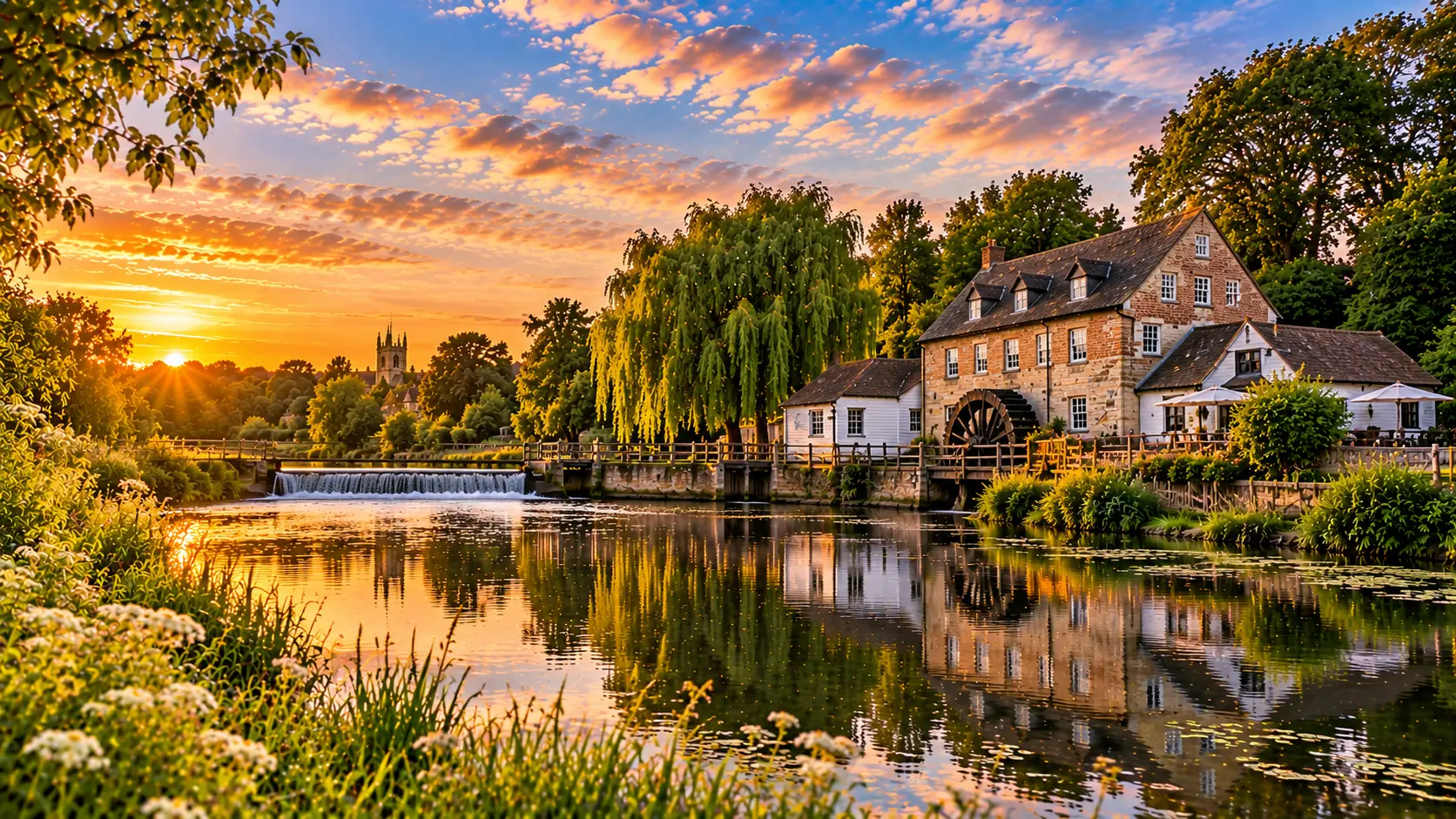
Brampton, Cambridgeshire Area Guide
Living in Brampton, Cambridgeshire
Combining the character and community of a traditional Cambridgeshire village with excellent access to Huntingdon, London, Cambridge and the wider road network, Brampton has become one of the most popular places to live in the Huntingdon area. This is no tiny rural hamlet.
Brampton is a substantial and well-established village with a population of around 5,000, its own primary school, shops, healthcare facilities, pubs, sports clubs, golf course and extensive recreational facilities. Yet countryside is never far away.
Brampton Wood, the River Great Ouse, Portholme and the 150-acre Hinchingbrooke Country Park provide exceptional opportunities for walking, cycling and enjoying the outdoors.
Huntingdon railway station is only a short distance away, providing direct services towards London and Peterborough, while the nearby A1 and A14 make Brampton particularly convenient for people travelling throughout Cambridgeshire and beyond.
For buyers searching for property in Brampton, Cambridgeshire, the housing market is remarkably diverse.
Historic cottages and period houses sit alongside established family homes, bungalows, modern developments and substantial detached properties.
For families, professionals, London commuters, downsizers and anyone wanting village life without sacrificing everyday amenities, Brampton deserves serious consideration.
Where is Brampton?
Brampton lies approximately two miles south-west of Huntingdon in Cambridgeshire.
The village occupies an exceptionally convenient position close to the A1 and A14, providing excellent connections in almost every direction.
Huntingdon lies immediately to the east and provides the nearest mainline railway station, major supermarkets, hospital, shopping and additional leisure facilities.
Cambridge lies approximately 16–20 miles to the south-east, while St Neots is easily accessible to the south.
To the north and east of Brampton are the open landscapes surrounding Hinchingbrooke Country Park and Portholme, while Brampton Wood lies approximately 1.5 miles west of the village.
This combination of connectivity and countryside is central to Brampton's appeal.
A Brief History of Brampton
Brampton has a history stretching back more than a thousand years.
The village appears in the Domesday Book of 1086, when it was recorded as Brantune.
At the time, Brampton contained two manors along with extensive agricultural land, approximately 100 acres of meadow, almost 200 acres of woodland and two watermills.
The village's parish church predates Domesday, demonstrating that an established community existed here before the Norman Conquest.
Agriculture remained fundamental to Brampton's development for centuries, while the proximity of important estates including Hinchingbrooke also influenced village life.
Today, that long history can still be seen in the historic centre, church, cottages, old houses and surviving landscape.
St Mary Magdalene Church
One of Brampton's most important historic buildings is St Mary Magdalene Church on Church Road.
Although a church existed here before the Domesday survey, much of the present building dates from later centuries.
Parts date from the medieval period, while the nave was added during the 15th century and the present tower dates from 1635.
The churchyard also contains an important connection with one of Huntingdonshire's most influential families.
The Montagu family, Earls of Sandwich and former owners of the nearby Hinchingbrooke estate, have a family plot here.
The church and its surroundings contribute significantly to the historic character of the village.
Samuel Pepys and Brampton
Brampton has a particularly fascinating connection with the famous 17th-century diarist Samuel Pepys.
Pepys had family connections with the village and visited Brampton regularly.
The property now known as Pepys House was owned by his uncle Robert Pepys and later became associated with Samuel's parents and family.
It is thought to date principally from the late 16th century and remains an important surviving building connected with Pepys.
In his diary, Pepys repeatedly referred affectionately to Brampton and considered the possibility of retiring here.
There is even a local story involving his fortune.
During the panic surrounding the Dutch raid on the Medway in 1667, Pepys arranged for gold to be buried at Brampton for safekeeping and later worried about whether all of it had been recovered.
Whether searching for buried treasure is advisable is another matter, but the story adds another intriguing chapter to Brampton's history.
Property in Brampton
The Brampton Property Market
Brampton has a broad housing market ranging from relatively affordable starter homes through to substantial detached houses and individual period properties.
That diversity is one of its major strengths.
Unlike some of the smaller villages around Huntingdon where only a handful of properties may sell each year, Brampton offers buyers a much wider choice.
The village includes:
Period cottages
Historic houses
Victorian and Edwardian property
Terraced houses
Semi-detached family homes
Detached houses
Bungalows
Modern developments
Executive family homes
Individual substantial properties
As with any diverse market, headline average house prices should be treated cautiously.
A modern two-bedroom property and a substantial detached period house occupy entirely different parts of the market despite sharing the same village name.
For sellers, accurate valuation therefore requires consideration of the individual street, property type, plot, condition, specification and position within Brampton.
Character and Period Property
The historic parts of Brampton contain some particularly attractive older homes.
Period cottages and houses can be found around established village streets and close to the historic centre.
Depending on the individual property, buyers may encounter features including:
Exposed beams
Open fireplaces
Traditional brickwork
Sash windows
Thatched or tiled roofs
Mature gardens
Historic outbuildings
Some properties may be listed or affected by conservation considerations, so buyers should always investigate planning restrictions before purchasing if they intend to alter or extend a historic home.
For many buyers, however, this architectural character is precisely what makes Brampton appealing.
Family Homes in Brampton
Brampton has an extensive selection of conventional family housing.
Three and four-bedroom detached and semi-detached homes with gardens, garages and off-road parking form an important part of the market.
This gives families considerably more choice than in some of the smaller neighbouring villages.
The combination of Brampton Village Primary School, recreational facilities, local shops and access to Huntingdon makes these homes particularly appealing to family buyers.
Modern Homes
More recent development has expanded Brampton considerably.
Modern housing provides options for buyers wanting contemporary layouts, energy efficiency, en-suite bathrooms, open-plan living and off-road parking rather than the maintenance associated with older property.
The expansion of residential development around the village has also increased the range of homes available at different price points.
Bungalows
Brampton contains a useful supply of bungalows and single-storey properties.
These can be particularly attractive to downsizers who want to remain within a community offering shops, healthcare and social facilities without moving into a larger town.
Good-quality bungalows can therefore generate strong demand when they come to market.
Why Move to Brampton?
Brampton's appeal comes from the fact that it combines village life with an unusually strong level of infrastructure.
Residents benefit from:
Brampton Village Primary School
Local shops
Co-op
Post Office
Pharmacy
Butcher
Healthcare
Dental services
Pubs and restaurants
Village green
Sports pitches
Golf course
Bowling club
Tennis and multi-use games facilities
Skate park
Brampton Wood
Hinchingbrooke Country Park
Countryside walks
Huntingdon railway station nearby
Direct access towards the A1 and A14
Hinchingbrooke Hospital nearby
For buyers who like the idea of village living but don't want to drive several miles every time they need a pint of milk, Brampton makes a compelling case.
Shops and Everyday Amenities
Brampton is particularly well served for a village.
Local amenities include a Co-op, Post Office, pharmacy, butcher, convenience shopping, hairdressers and other independent businesses.
The village also has healthcare facilities including a GP practice, dental surgery and veterinary services.
Gardeners are well catered for too, with garden-centre and nursery facilities nearby.
For larger shopping trips, Huntingdon is only a short distance away and provides major supermarkets, retail parks and town-centre shopping.
St Ives and St Neots provide further options.
Eating and Drinking in Brampton
Brampton has a particularly good selection of pubs and places to eat for a village of its size.
One of the best-known is Brampton Mill Huntingdon, occupying a beautiful riverside setting beside the Great Ouse.
The mill environment makes it particularly popular during the warmer months and provides an excellent destination to combine with a countryside walk.
Other village options include Gurkha on the Green and The Dragoon Brampton.
Having several places to eat and drink within the village is an important lifestyle advantage, particularly for buyers moving from a larger town or city who don't want village life to feel isolated.
Huntingdon provides considerably more choice only a short distance away.
Brampton Mill and the River Great Ouse
The River Great Ouse forms an important part of the landscape around Brampton.
Brampton Mill occupies an especially picturesque position beside the water.
The surrounding meadows and river corridor provide attractive walking routes and valuable wildlife habitat.
For residents, this creates another distinctive local environment alongside Brampton Wood and Hinchingbrooke Country Park.
Rather than having one principal area of countryside, Brampton effectively has several completely different landscapes to explore.
Brampton Wood
One of Brampton's greatest natural assets is Brampton Wood Nature Reserve.
Located approximately 1.5 miles west of the village, Brampton Wood is Cambridgeshire's second-largest ancient woodland.
The Wildlife Trust records the woodland as being at least 900 years old, with its history extending back to the Domesday Book.
The reserve covers approximately 132 hectares and contains more than two miles of broad woodland rides.
Trees include oak, ash, field maple, birch and aspen, while the woodland provides habitat for wildlife including dormice, woodpeckers, butterflies and an extraordinary variety of woodland plants.
Spring is particularly beautiful, when bluebells and other ancient woodland flowers appear.
The reserve is designated both Ancient Woodland and a Site of Special Scientific Interest. (wildlifebcn.org)
For walkers, families and nature lovers, having this environment immediately outside the village is a major attraction.
Hinchingbrooke Country Park
On the eastern side of Brampton lies Hinchingbrooke Country Park.
Covering approximately 150 acres, the park contains open grassland, mature woodland, lakes, wildflower meadows and an extensive network of paths.
There are play facilities, a café and routes suitable for everything from a short family walk to running and dog walking.
The park has held a Green Flag Award since 2018. (huntsdc.gov.uk)
Significant improvements to the park have also been approved, including enhanced paths, additional parking, improved accessibility, expanded café/community facilities and upgraded play provision. (brampton-cambs-pc.gov.uk)
For Brampton residents, the park effectively provides a vast recreational space between the village and Huntingdon.
Portholme
To the north-east lies Portholme, the huge expanse of meadow between Brampton, Huntingdon and Godmanchester.
Brampton Parish Council describes Portholme as reputedly the largest unenclosed meadow in England.
The landscape is protected for its ecological importance and is recognised as a Site of Special Scientific Interest and Special Area of Conservation.
During summer it provides an extraordinary open landscape for walking, while seasonal flooding creates an entirely different environment during wetter periods. (brampton-cambs-pc.gov.uk)
Together with the Great Ouse, it creates a valuable green corridor linking Brampton with Huntingdon and Godmanchester.
Walks in Brampton
For walkers, Brampton is exceptionally well positioned.
The parish has an extensive network of footpaths and bridleways connecting the village with surrounding countryside.
Brampton Circular Walk
Brampton Parish Council publishes a dedicated circular walk incorporating local history and countryside.
It provides an excellent introduction to the village and surrounding landscape and even passes historic features including an old ice house. (brampton-cambs-pc.gov.uk)
Brampton Wood
Explore more than two miles of broad rides through ancient woodland.
Spring bluebells make this particularly attractive at that time of year.
Hinchingbrooke Country Park
The park offers surfaced and unsurfaced paths around lakes, woodland and open grassland.
It is particularly useful for families, runners and dog walkers.
Brampton Mill and the Great Ouse
Walk towards the river and explore the countryside surrounding Brampton Mill.
Portholme
Longer routes can incorporate the vast meadows towards Huntingdon and Godmanchester.
The result is an unusually varied choice of walking environments from a single village.
Cycling
Brampton's location makes cycling practical both recreationally and for shorter everyday journeys.
Local routes connect the village towards:
Huntingdon
Hinchingbrooke
Godmanchester
Buckden
Grafham
The Great Ouse valley
Surrounding countryside
Huntingdon railway station is also close enough that cycling to the station may be practical from some parts of Brampton.
For leisure cyclists, the combination of quiet country roads and nearby villages creates a large network of possible routes.
Sport and Leisure
Brampton has excellent recreational provision.
The Memorial Playing Fields include multiple football pitches, cricket facilities, a multi-use games area and skate park.
There are also children's play facilities and community spaces.
The village has its own bowling club and Brampton Park Golf Club, an established 18-hole golf course with practice facilities.
Golfers therefore have a substantial sporting facility immediately within the village rather than needing to travel elsewhere.
Walking, running and cycling are also extremely popular because of the surrounding countryside.
For swimming and gym facilities, Huntingdon's leisure centres are only a short journey away.
Huntingdon Racecourse
Huntingdon Racecourse lies within the wider Brampton parish.
The racecourse hosts National Hunt racing throughout the season and is one of the area's best-known sporting venues.
Even for residents who aren't regular racegoers, having a significant regional sporting venue nearby adds another leisure option.
The racecourse's historic grassland is also ecologically important, with areas of surviving ridge-and-furrow meadow and notable wildflowers.
Schools in Brampton
Brampton Village Primary School
Families benefit from having a substantial primary school directly within the village.
Brampton Village Primary School is located on The Green and educates children aged 4–11.
Current government data records a capacity of 630 pupils, with nursery provision also available. (get-information-schools.service.gov.uk)
Its most recent published graded Ofsted inspection was in March 2023, when the school continued to be rated Good. (reports.ofsted.gov.uk)
Having a large primary school in the centre of the village is an important advantage for families.
Secondary Schools
Secondary education is available nearby in Huntingdon.
Options include Hinchingbrooke School and St Peter's School, with further choices throughout the wider Huntingdonshire area.
Hinchingbrooke is particularly close to Brampton.
Families should always check current Cambridgeshire County Council admissions and catchment information for an individual property before purchasing.
School catchments and admission criteria can change, and proximity to a school does not automatically guarantee a place.
Getting to Huntingdon Railway Station
One of Brampton's greatest practical advantages is its proximity to Huntingdon railway station.
The station is only a short journey from the village and provides direct services towards London and Peterborough.
This makes Brampton particularly appealing to buyers who want a village home but still need access to London for work.
Depending on the exact property and preferred route, residents can travel to the station by car, bicycle, bus or taxi.
The ability to combine village life with a mainline station only a few miles away is a significant advantage.
Commuting to London from Brampton
Brampton can work particularly well for London commuters and hybrid workers.
Huntingdon is on the East Coast Main Line corridor, with direct trains towards London.
The parish council describes the journey from the local area to London King's Cross as approximately one hour, although exact rail journey times depend on the service used. (brampton-cambs-pc.gov.uk)
For someone who only needs to be in London two or three days a week, Brampton can provide an appealing alternative to living much closer to the capital.
Buyers can potentially gain a larger house, garden and countryside environment while retaining practical rail access.
Travelling to Cambridge
Cambridge is approximately 16–20 miles from Brampton, depending on the destination and route.
Driving is usually via connections towards the A14.
Cambridge's employment centres are spread throughout the city and its outskirts, including:
Cambridge Science Park
Cambridge North
Cambridge city centre
University sites
Biomedical Campus
Technology and research parks
Journey times vary significantly during peak periods.
Public-transport options can also involve travelling through Huntingdon and connecting with services towards Cambridge, including the wider Guided Busway network.
Bus Services
Brampton benefits from bus connections that are more useful than those available in many smaller villages.
The parish council records a regular service passing through Brampton between Huntingdon and St Neots. (brampton-cambs-pc.gov.uk)
Current information for Hinchingbrooke Country Park also identifies the Whippet 66 as serving St Neots, Buckden and Brampton on Mondays to Saturdays. (huntsdc.gov.uk)
As always, buyers who rely on a particular bus for commuting or school should check the latest timetable before moving.
Travelling by Car
Road connectivity is one of Brampton's strongest advantages.
The village has very convenient access to both the A1 and A14.
The A1 provides north-south connections towards Peterborough and the wider national motorway network.
The A14 provides east-west connections towards Cambridge, the A1(M) corridor and East Anglia.
Indicatively:
Huntingdon – approximately 2 miles
St Neots – approximately 10–12 miles
St Ives – approximately 8–10 miles
Cambridge – approximately 16–20 miles
Peterborough – approximately 25 miles
Journey times naturally depend on traffic and the precise starting point within Brampton.
For households where different family members work in different towns, this road connectivity can be especially valuable.
Brampton and Huntingdon
Brampton's relationship with Huntingdon is fundamental to its appeal.
Residents have quick access to Huntingdon's:
Mainline railway station
Supermarkets
Town-centre shops
Restaurants
Leisure facilities
Professional services
Hinchingbrooke Hospital
Secondary schools
Yet Brampton maintains a distinct village identity.
For many buyers, this provides an ideal balance.
They can use Huntingdon's infrastructure without necessarily wanting to live within the town itself.
Healthcare
Brampton is particularly well served for healthcare.
The village has local GP and dental provision, while pharmacies and other healthcare services are available locally and in nearby Huntingdon.
Hinchingbrooke Hospital is exceptionally close, situated between Brampton and Huntingdon.
For families, older residents and anyone with regular healthcare requirements, this proximity can be an important practical consideration.
Specialist services are also available in Cambridge and Peterborough.
Is Brampton a Good Place to Live?
For many buyers, Brampton offers one of the best all-round village propositions around Huntingdon.
It has genuine village character without feeling remote.
Families have a primary school, sports facilities, play areas and substantial choice of housing.
Commuters have Huntingdon railway station nearby.
Drivers have easy access to the A1 and A14.
Golfers have a course within the village.
Walkers have Brampton Wood, Hinchingbrooke Country Park, Portholme and the Great Ouse.
Older residents and downsizers benefit from local shops and healthcare.
And people wanting a sense of community have pubs, clubs, sports and village organisations.
The main consideration is that Brampton is now a large village rather than an isolated rural settlement.
For buyers wanting an extremely small, secluded community, one of the surrounding villages may be more appropriate.
For those wanting village life combined with convenience, however, that scale is one of Brampton's greatest strengths.
Brampton or Huntingdon?
Buyers often consider both.
Huntingdon provides the railway station, larger supermarkets, town-centre amenities and a broader selection of apartments and urban housing.
Brampton provides more of a traditional village environment, with a village green, local pubs, extensive countryside and a strong selection of family houses.
For commuters who want to walk to the railway station every day, Huntingdon may be more convenient.
For buyers prioritising a garden, village environment and countryside while remaining close to the station, Brampton can be particularly compelling.
Brampton or Buckden?
Brampton and Buckden are also natural alternatives for many buyers.
Both are substantial villages west and south-west of Huntingdon with good amenities and attractive historic centres.
Brampton is closer to Huntingdon railway station and Hinchingbrooke Hospital.
Buckden lies further south and can be particularly convenient for St Neots and routes towards Bedford.
The individual property and commuting requirements will often determine which village suits a buyer best.
Things to Do in Brampton
Explore Brampton Wood
Walk through more than 900 years of woodland history and enjoy spring bluebells, wildlife and ancient trees.
Visit Hinchingbrooke Country Park
Explore 150 acres of lakes, woodland, meadows and family recreation space.
Walk to Brampton Mill
Follow local paths towards the Great Ouse and enjoy the riverside landscape.
Explore Portholme
Experience the extraordinary open meadow landscape between Brampton, Huntingdon and Godmanchester.
Play Golf
Enjoy 18 holes at Brampton's own golf course.
Discover Samuel Pepys' Brampton
Explore the village's connections with one of Britain's most famous diarists.
Visit Huntingdon Racecourse
Enjoy a day at one of Cambridgeshire's principal horse-racing venues.
Explore Huntingdon
Shopping, restaurants, leisure facilities and historic attractions are only minutes away.
Walk Around the Historic Village
Discover St Mary Magdalene Church, the village green and Brampton's older streets.
Buying Property in Brampton
If you're considering buying a house in Brampton, it is worth exploring the different parts of the village carefully.
Important considerations include:
Distance to Huntingdon station
School catchments
Access to the A1 and A14
Proximity to shops
Property age
Listed-building status
Parking
Garden size
Access to countryside
Flood risk for relevant locations
Broadband and mobile connectivity
Future planning and development
Traffic at peak periods
Different parts of Brampton can provide noticeably different environments.
A period cottage near the historic centre will appeal to a different buyer from a modern detached home with a double garage.
Understanding those differences is important when assessing value.
Selling a Property in Brampton
When selling a property in Brampton, there is a substantial lifestyle story to communicate.
A buyer may be moving from London and looking for more space.
They may want to be close to Huntingdon station.
They may be searching for a family house near a village primary school.
They may want a bungalow close to shops and healthcare.
Or they may simply want somewhere where woodland, lakes, riverside and open countryside are part of everyday life.
Those advantages shouldn't be reduced to a short list of room dimensions.
At Lennon James Property, we believe outstanding property marketing should communicate both the home and the lifestyle surrounding it.
That means professional photography, thoughtful presentation, detailed descriptions, intelligent digital marketing and a clear understanding of the buyers most likely to appreciate the property.
Estate Agents in Brampton, Cambridgeshire
If you're considering selling a property in Brampton, searching for houses for sale in Brampton or simply want to understand what your home might be worth, choosing an estate agent who understands the nuances of the village is important.
Brampton contains a remarkably broad housing market.
A period cottage, bungalow, modern family house and substantial individual home all require different pricing and marketing strategies.
At Lennon James Property, our approach combines exceptional presentation, proactive marketing and personal service.
We take the time to identify what makes each property distinctive and build the marketing around those qualities.
Explore properties for sale in Brampton or arrange a property valuation with Lennon James Property.
Frequently Asked Questions About Brampton, Cambridgeshire
Is Brampton a good place to live?
Yes. Brampton combines extensive village amenities, a primary school, pubs, sports facilities and countryside with excellent access to Huntingdon railway station, the A1 and A14.
Where is Brampton in Cambridgeshire?
Brampton lies approximately two miles south-west of Huntingdon in Cambridgeshire.
Is Brampton good for London commuters?
Yes. Huntingdon railway station is only a short distance away and provides direct services towards London. The local parish council describes King's Cross as approximately an hour by train from the area.
Does Brampton have a railway station?
No. Residents generally use nearby Huntingdon railway station.
Does Brampton have a primary school?
Yes. Brampton Village Primary School educates children aged 4–11 and also has nursery provision.
What secondary schools are near Brampton?
Nearby options include Hinchingbrooke School and St Peter's School in Huntingdon. Families should check current catchments and admissions before moving.
Does Brampton have shops?
Yes. Brampton has an unusually good range of village amenities including convenience shopping, a Post Office, pharmacy, butcher and other independent businesses.
Does Brampton have pubs?
Yes. Brampton has several pubs and places to eat, including riverside Brampton Mill and other establishments around the village.
Is there a golf course in Brampton?
Yes. Brampton Park Golf Club provides an 18-hole course and practice facilities.
What is Brampton Wood?
Brampton Wood is a 132-hectare ancient woodland nature reserve approximately 1.5 miles west of the village. It is Cambridgeshire's second-largest ancient wood and is at least 900 years old.
Is Hinchingbrooke Country Park close to Brampton?
Yes. The 150-acre country park lies immediately between Brampton and Huntingdon and provides lakes, woodland, grassland, play areas and walking routes.
Are there good walks around Brampton?
Yes. Brampton has excellent access to Brampton Wood, Hinchingbrooke Country Park, Portholme, the Great Ouse and a network of local footpaths.
What types of property are available in Brampton?
Buyers can find period cottages, terraced and semi-detached homes, bungalows, modern houses and substantial detached properties.
Is Brampton suitable for families?
Yes. Its primary school, sports facilities, playgrounds, countryside, shops and proximity to Huntingdon make Brampton particularly popular with families.
Is Brampton close to Cambridge?
Cambridge is approximately 16–20 miles away depending on the route and destination. The A14 provides the principal road connection towards the city.
Is Brampton close to the A1?
Yes. Brampton has particularly convenient access to the A1 as well as the A14.
What is Brampton famous for?
Brampton is notable for its association with Samuel Pepys, its historic village centre, Brampton Wood, proximity to Hinchingbrooke and its position beside the Great Ouse landscape.
Did Samuel Pepys live in Brampton?
Pepys had close family connections with Brampton and visited regularly. His uncle owned the house now known as Pepys House, and Samuel's parents later lived there. Pepys frequently referred to Brampton in his diary.
Is Brampton bigger than the surrounding villages?
Brampton is one of the larger villages immediately surrounding Huntingdon, with a population of around 5,000 and a comparatively extensive range of local amenities.